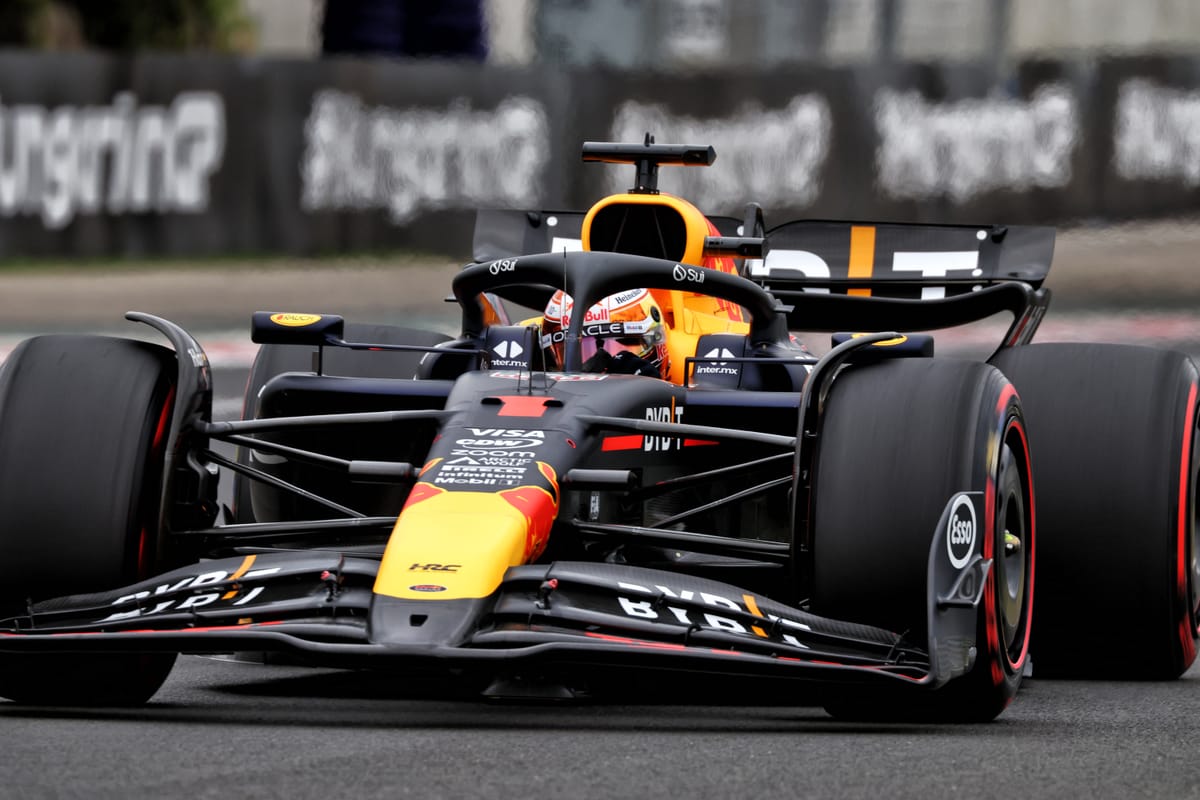
As Red Bull Racing unveils its latest upgrade for the 2024 Formula 1 season during the Hungarian Grand Prix, an important aspect merits attention: the modifications to its front wing design. While the focus often shifts to the bodywork alterations further back on the car, these subtle changes to the front wing could yield significant benefits for the team’s performance.
Notably, the introduction of the detached front wing main plane seems puzzling. “Since the introduction of Red Bull’s 2024 car, I have been wondering why the team didn’t go for the detached front wing main plane central section. It had it on the 2022 and 2023 cars, so what made it change direction for 2024?” said Gary Anderson, an esteemed F1 analyst. This curiosity suggests that the decision to revert to previous designs could have far-reaching consequences for aerodynamics and overall performance.
Anderson emphasizes the importance of airflow along the car’s centerline, which affects the underfloor and diffuser's efficiency. “The airflow on the centreline of the car is critical to the performance of the underfloor and diffuser,” he explained. For optimal performance, it’s vital for the airflow to attach smoothly to the underside of the nose. If not managed properly, the flow could disrupt the balance needed between the nose and the chassis.
-competes-with-Ferraris-Monegasque-driver-Charles-Leclerc.jpeg?trim=0,0,0,0&width=1200&height=800&crop=1200:800)
Despite the adjustments to narrow the nose tip, Anderson notes, “In my opinion, it is very easy to overwork this flow and lose all its energy before it gets into the leading edge of the underfloor.” The new design offers some improvement, although it lacks the efficiency of having a continuous slot gap, a feature that could enhance airflow even more.
One of the truly innovative features in Red Bull's initial design was relocating the front wing adjuster inboard. “This meant that any flexing... would be happening outboard,” Anderson pointed out. This design allowed the underfloor airflow to remain more stable, increasing potential downforce. However, the new package sees a return to the outboard configuration. “With this new package, Red Bull has moved the adjuster outboard again,” he stated, raising questions about the rationale behind this change.
There are two theories regarding this move. One possibility is that the front downforce drop-off resulting from outboard flexing did not adequately balance the car, especially in high-speed corners. This necessitated a reduction in the front wing angle, which could lead to excessive understeer in slower turns, an issue known to affect driver Sergio Perez. Anderson remarked, “We know that Sergio Perez can’t really handle a car that is pointy in high-speed corners, so this modification is logical, at least for him.” Meanwhile, teammate Max Verstappen has a different driving style that allows him to manage these dynamics more comfortably.
The recent rain during qualifying might have hindered Perez’s performance, leading to a crash that eliminated him from Q1. Had conditions been different, he might have benefited from this wing adjustment, boosting his confidence.
The second reason for the shift in the front wing adjuster configuration could be the FIA's increased scrutiny on front wing flexing. Anderson speculates, “Perhaps Red Bull needs more of it outboard to be able to balance the car than it can get away with.” This cautious approach indicates the team's awareness of regulatory changes while striving to maintain competitive performance.
In essence, while Red Bull’s upgrade at the Hungarian Grand Prix may seem minor on the surface, the implications of these front wing changes are vast. The adjustments not only reflect the team's reaction to driver performance and regulatory scrutiny but also highlight their ongoing quest for aerodynamic superiority. As the season progresses, these decisions could prove pivotal in their championship aspirations.