Formula One racing is often characterized as a high-speed game of chess. It involves intricate strategies that a dedicated team meticulously plans using advanced software and extensive data analysis. Tom McCullough, Performance Director for the Aston Martin F1 Team, elaborates on the vital elements that formulate competitive racing strategies.
"When you break strategy down the aim is relatively simple: get your car from the start to the end of a race as fast as possible," said Tom McCullough. This fundamental goal drives the team in every Grand Prix.
The foundation of any racing strategy begins with what McCullough refers to as the Monte Carlo simulation: a tool that helps predict various outcomes in a highly unpredictable environment. "Devising a strategy starts with what we call the Monte Carlo simulation – a way to model the probability of different outcomes that are difficult to predict due to different variables. This simulation is designed to work out the fastest strategy, considering the tyres available and the characteristics of the circuit."
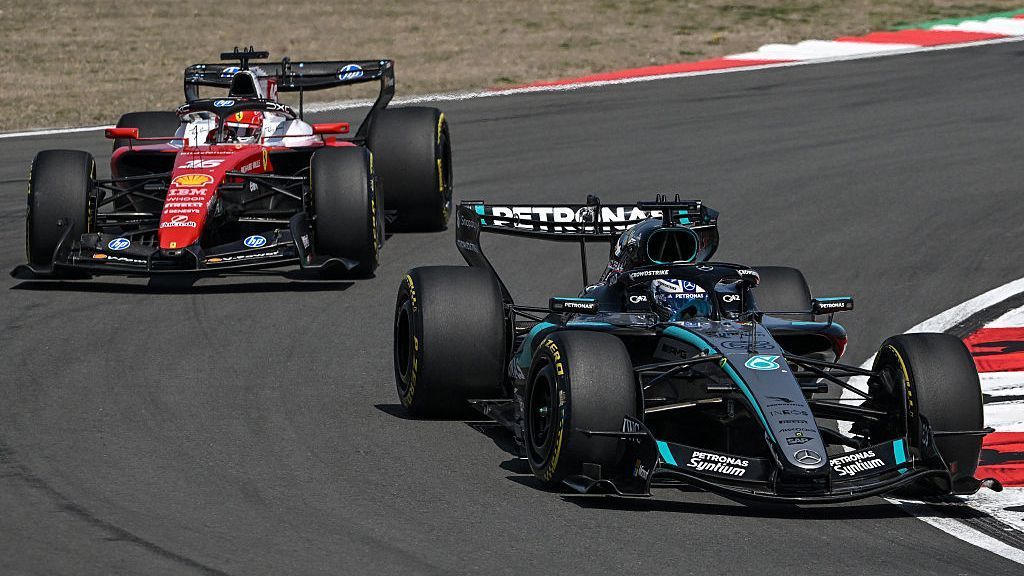
-competes-with-Ferraris-Monegasque-driver-Charles-Leclerc.jpeg?trim=0,0,0,0&width=1200&height=800&crop=1200:800)
Once the data is fed into the software, the result presents a potential race plan. "You plug that data into your software and ask, 'Without interacting with anyone else, what is the fastest way to do this race?' and it will provide an answer saying a two-stop strategy with stops on lap 12 and lap 32, for example," McCullough explained, highlighting how this is just a starting point that requires further refinement.
A key factor in shaping these strategies is tyre management. McCullough emphasizes, "Tyres are crucial in F1 and managing them so they provide optimal performance throughout the race is at the heart of many strategic decisions." Understanding tyre life, degradation rates, and the performance differences between the compounds supplied by Pirelli is essential.
He elaborates, "If you've got three tyre compounds that are very similar in pace, degradation, and life, it doesn't really matter which tyre you use; you'll tend to do as few pitstops as possible if the degradation is low." However, under conditions of high degradation or limited tyre life, additional pit stops become necessary.
Several critical factors influence tyre performance, such as track conditions, air, and surface temperatures, as well as circuit design. "The three main factors that influence how the tyres work at a track are: how rough the tarmac is, how high the air and track temperature is, and how many high-speed corners a track has," said McCullough.
For instance, he noted, "If a circuit has recently been resurfaced, that drastically influences levels of abrasion, track temperature, and grip levels in high-speed corners, as well as the difference in performance, tyre life, and degradation between each compound."
The time spent in the pits also plays a critical role in strategy formulation. "Pitstop time loss is important to consider because you're trying to find the right balance between losing time in the pits versus staying out on track with tyres that are giving up performance," explained McCullough.
He further stipulated that the timing of a pit stop is carefully calculated to allow drivers like Lance Stroll or Fernando Alonso to rejoin the race in clear air. "Time lost during a pitstop varies between roughly 20 and 30 seconds depending on the circuit," he stated, illustrating the contrasting scenarios at different venues such as Spa and Monza.
The weather adds another layer of complexity to race strategies. "Weather has a huge impact on strategy," McCullough remarked. In stable conditions, factors like temperature can cause significant variance in tyre performance. The regulations mandate that two different types of tyres must be used in dry conditions, leading to at least one required pit stop.

"In the wet, being on the right tyres at the right time is the key phrase," stated McCullough, emphasizing the need for driver feedback to make timely decisions. The ability to switch between dry and wet tyres during rapidly changing conditions can often determine the outcome of a race.
As teams prepare for each Grand Prix, data-driven strategies continue to evolve, emphasizing the blend of art and science in Formula One racing. The insights provided by McCullough illustrate the meticulous planning necessary to navigate this fast-paced sport, demonstrating that every variable counts as teams race towards the chequered flag.