
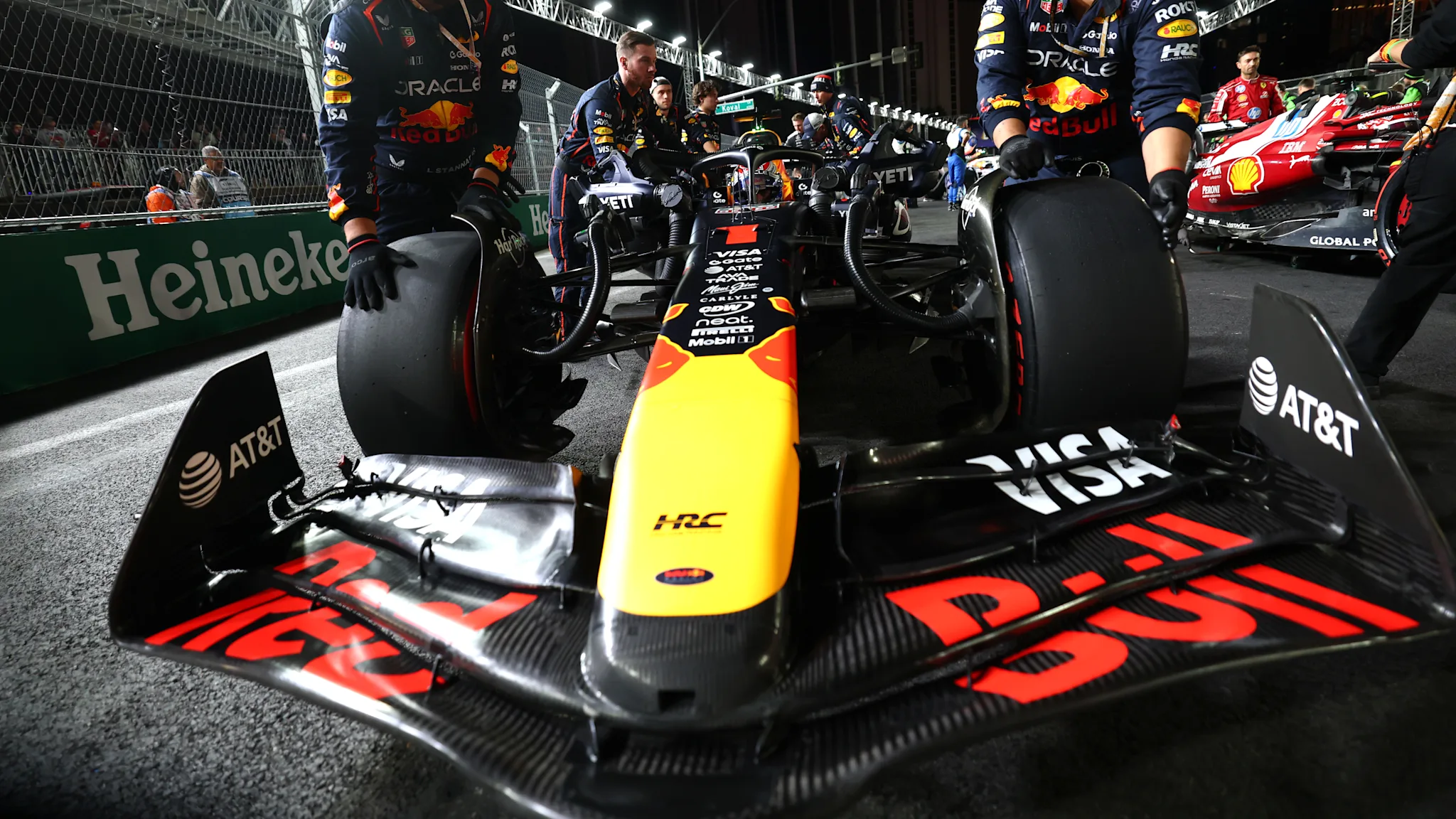
The Red Bull Racing team has made notable adjustments to their front wing, yielding substantial benefits for driver Max Verstappen during the latter half of the Formula 1 season. Since implementing these changes post-Zandvoort, the performance of Verstappen's car has markedly improved, positioning him firmly in the championship race.
"Since returning from the summer break, Verstappen has won five times in 10 races. In the 13 races before the break, he won only twice," noted F1 analyst Mark Hughes, highlighting the stark difference in performance pre and post modifications.
The enhancements began with the front wing introduced at Zandvoort, which maintained its large plan area while allowing for several adaptations in flap shape and flexibility control. These tweaks have played a crucial role in the car's newfound competitiveness on various circuits.
Hughes elaborated, saying, "The basic Zandvoort front wing has been retained ever since, but the variations have been pivotal in optimizing the car's handling and aerodynamics. This has directly contributed to Verstappen's recent successes."
In the highly competitive world of Formula 1, aerodynamic efficiency is paramount. Red Bull's engineering team has closely analyzed the front wing's performance, adapting it to the changing requirements of each track. This focus on the front wing’s design underscores Red Bull's commitment to maximizing performance for their star driver.
"The adjustments have allowed for greater downforce and stability, especially in tight corners," Hughes noted, emphasizing the technical advantages Verstappen has enjoyed.
Giorgio Piola, a renowned F1 illustrator and technical contributor, reiterated the importance of these developments, stating, "By refining the wing's characteristics, Red Bull has enabled Verstappen to extract better pace and consistency from the car. These improvements are critical as the season enters its final stages."
As the championship battle heats up, Verstappen's recent form suggests the adjustments have restored his confidence and racecraft. The once-dominant driver had faced challenges early in the season, but with careful engineering adjustments, he appears to have regained his edge.
The focus on these technical modifications reflects a broader trend in F1, where teams are increasingly turning to aerodynamic enhancements to secure a competitive advantage. Hughes concluded, "Red Bull’s willingness to innovate and adapt has been a hallmark of their success, and it’s proving invaluable in the quest for the title this year."
Looking ahead, the stakes are high as the championship race unfolds. With each race presenting unique challenges, the impact of Red Bull’s front wing changes will be closely monitored, particularly as Verstappen aims to capitalize on these enhancements to chase down another championship title.