
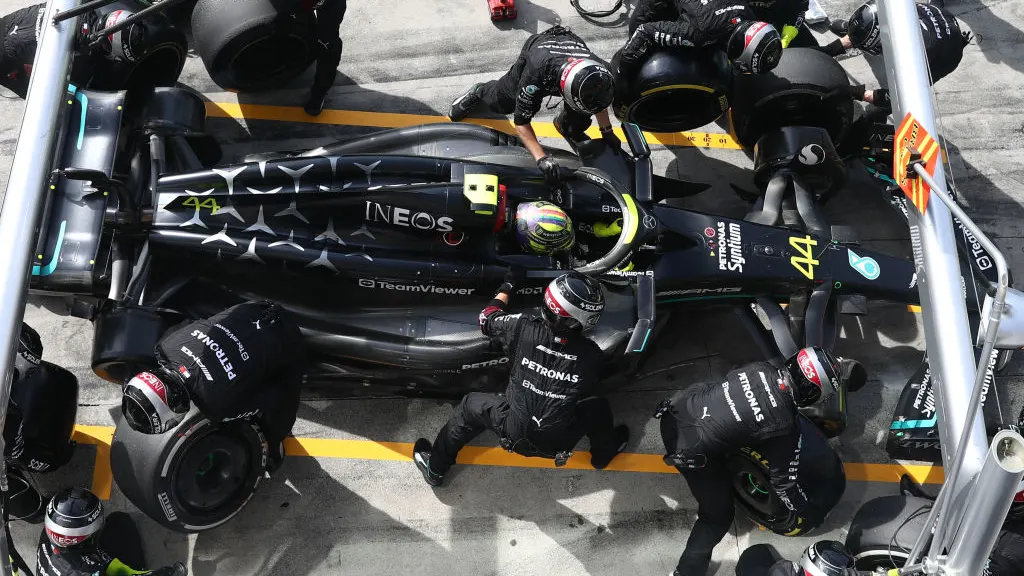
During the Italian Grand Prix at Monza, a venue synonymous with high-speed racing, Lewis Hamilton and Valtteri Bottas made waves with their unexpected decision to implement a reverse strategy. Traditionally, the Monza circuit is characterized as a one-stop race, where teams typically prefer to run medium tires followed by hard tires. However, these drivers defied expectations and emerged successfully on a different tactical path.
"The Italian Grand Prix has always favored a one-stop strategy. Even with softer tire compounds introduced by Pirelli this year, the consensus was that a single stop would dominate the race," explained Bernie Collins, former head of race strategy at Aston Martin. Despite this prevailing sentiment, Hamilton and Bottas opted to commence the race on hard tires, a choice that many considered risky.
Seven drivers at the rear of the field ultimately abandoned their one-stop plans, pivoting to two-stop strategies in hopes of gaining an advantage. Conversely, Hamilton and Bottas delivered a masterclass in strategy by deciding to stick with their unconventional medium-to-hard tire plan. Their choice set them apart from the majority of the field, showcasing their team's confidence in a variant strategy.
"There was definitely a sense of bravery in their approach, but their execution proved they could leverage the tires’ performance effectively," said Collins. The dynamic nature of the race required both drivers to maintain trajectory while adjusting their strategies based on real-time observations and performance data from their cars.
Hamilton emphasized the significance of teamwork in executing such a daring strategy, noting, "It’s about trust in the decision-making within the team and believing that our plan can work under pressure." His confidence in his crew and the chosen tactics played a crucial role in their stellar performance on the track.
Bottas, also keen on teamwork, echoed Hamilton's sentiment. He stated, "We knew it would be challenging, but the data suggested it was possible; it was important for us to stick to our plan and execute it precisely." Their collaboration and communication during the race were essential, as both drivers adapted to changing conditions and traffic situations.
As the laps unfolded, it became clear that their gamble was paying off. While others faltered, the duo's ability to maintain tire life and pace prompted critical observations from analysts and fans alike. Collins remarked, "Their performance exemplified how a calculated risk can yield unexpected rewards when the drivers and team align well."
The Monza Grand Prix will be remembered not just for its high speeds but for the bold decisions made by Hamilton and Bottas, as well as the implications of those decisions for future races. With their successful execution of a reverse strategy, both drivers have reinforced their status as not just skilled competitors, but also as strategic thinkers on the track.
In conclusion, the Italian Grand Prix highlighted the crucial interplay between strategy, teamwork, and execution in Formula 1 racing. As teams prepare for the upcoming races, the lessons learned from Hamilton and Bottas's performance will undoubtedly inform future tactical decisions across the grid. Their adaptability and resilience under differing conditions exemplify the spirit of competition in Formula 1, showcasing that sometimes, it's the daring strategies that lead to victory.