
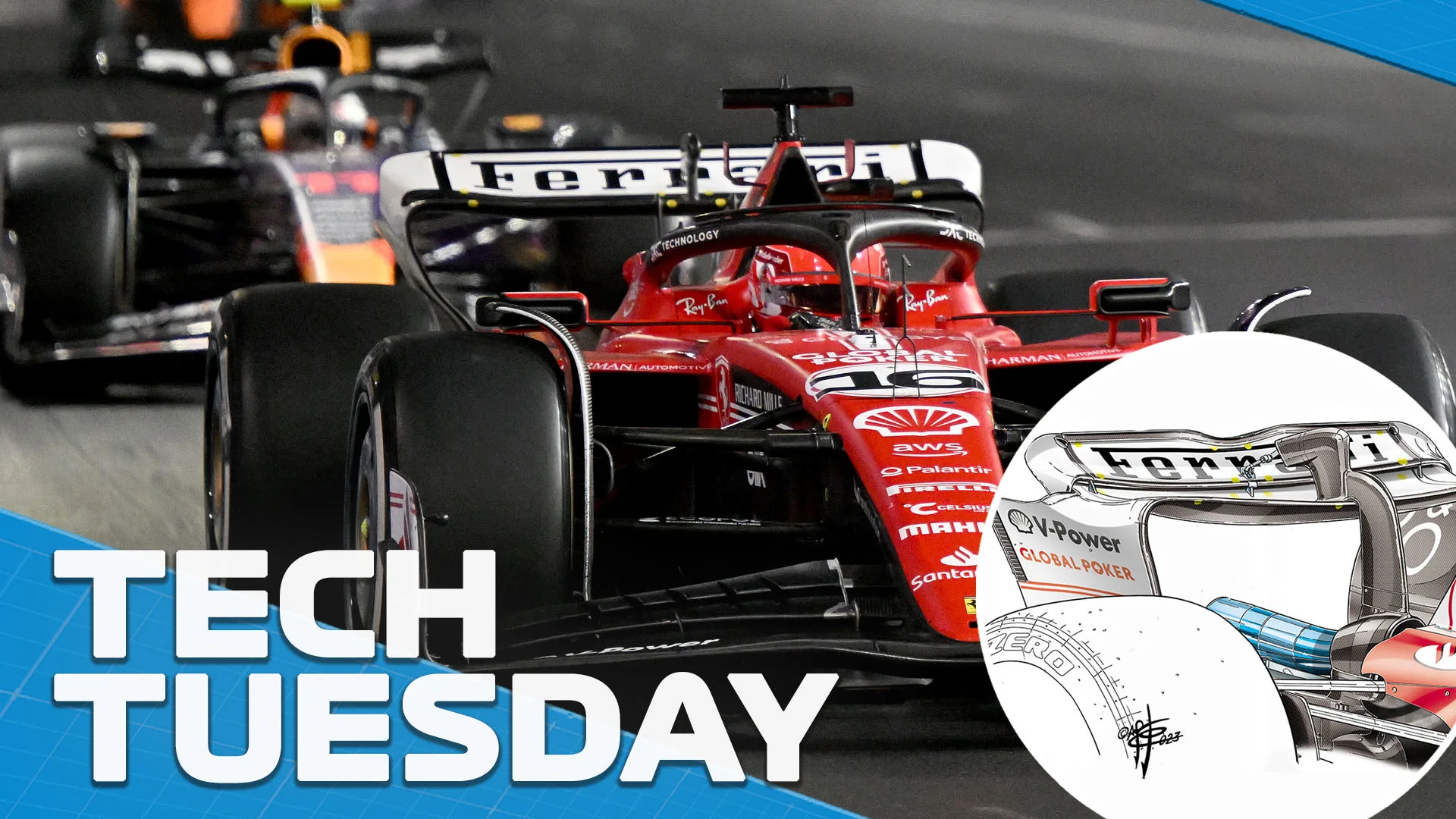
As the Formula 1 teams prepared for the Las Vegas Grand Prix last weekend, Ferrari's strategic choice regarding rear wing configurations was under the spotlight. This decision came amid fierce competition with Red Bull, as both teams opted for varying downforce levels throughout the weekend.
Ferrari introduced a low-downforce variant of their spoon wing, similar to the one they had previously employed in Spa. "This wing carries significant surface area on its underside, which is contoured to optimize downforce," explained Mark Hughes, a technical contributor. The design aimed to reduce drag while maintaining speed on the straights, a crucial aspect in the high-speed environment of Las Vegas.
The challenge, however, lay in balancing performance between the straights and corners. With the extra surface area of the underside compared to the upper wing, Ferrari aimed to increase their competitive edge. Hughes then highlighted the ongoing adjustments: "Both teams made significant changes to their downforce levels, trying to find the perfect setup to outwit the other."
Ferrari's gamble on the wing levels was particularly contentious as they sought to unlock the performance needed to challenge Red Bull. The stakes were high, and it was clear even before the race that the aerodynamic choices would heavily influence the outcome. "It’s always a delicate dance between downforce and drag, especially on a circuit like this where speed is paramount," noted Giorgio Piola, another technical expert.
As the teams took to the track, the immediate results of Ferrari’s qualifying strategy became apparent. Red Bull's modifications seemed to pay off, as they displayed their proficiency in both corners and straights. "We felt we had a good setup, but the advantage we hoped for just wasn’t as clear-cut as we wanted," said a Ferrari team engineer who wished to remain anonymous.
The strategic choices didn't just affect Ferrari's qualifying position; they also raised questions about whether the team could have attained a better result with a different approach. With the race unfolding, it was evident that Red Bull had capitalized on its downforce strategy, resulting in a tense battle at the front.
Ferrari's low-downforce configuration did help them in terms of speed on the straights, but it appeared to compromise their cornering ability, a critical factor in maintaining competitiveness throughout the race. Piola observed, "You could see the struggles in the corners, where the grip just wasn’t there, and they lost precious time."
Ultimately, Ferrari learned a valuable lesson in Vegas: the fine margins of aerodynamic choices can greatly influence race outcomes. Despite their efforts, the adjustments made were not sufficient to secure a victory. “In the end, it’s about finding that perfect balance, and we didn’t quite achieve that here,” reflected a member of the Ferrari team.
Looking ahead, Ferrari will undoubtedly analyze the data from Vegas meticulously in hopes of making better-informed decisions in future races. Each qualifying session presents an opportunity, and the lessons learned in Las Vegas may pave the way for improved performance in their forthcoming outings. As the season progresses, both teams will be keen to refine their strategies and perfect their aerodynamic setups, setting the stage for an exciting championship battle.