
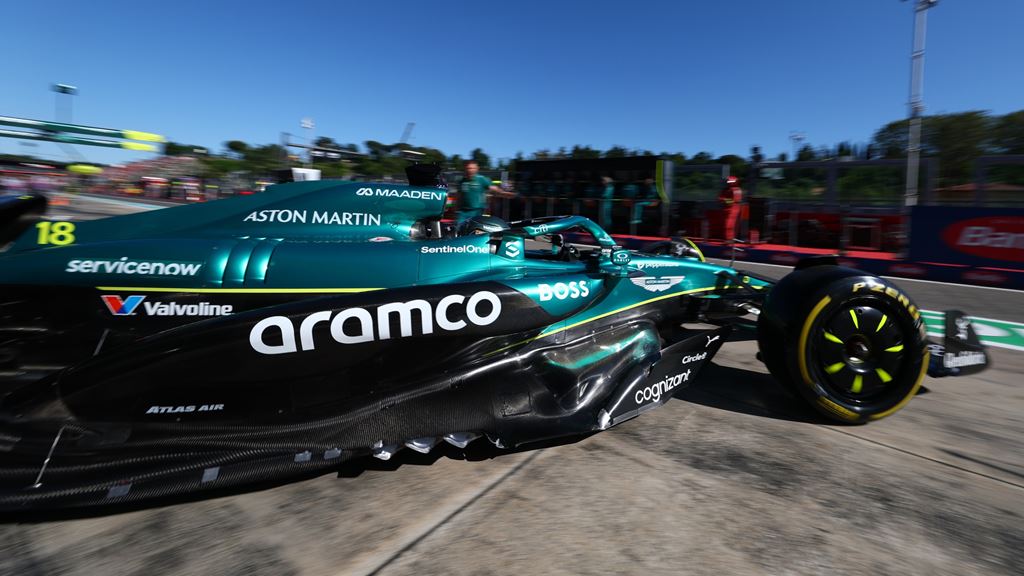
The 2025 Emilia-Romagna Grand Prix marked a pivotal moment for Aston Martin as they unveiled an extensive upgrade package for their AMR25 Formula 1 car, aiming to turn around a disappointing start to the season. After accumulating only 12 points in the first seven races, the British team made strategic changes to enhance their performance on the track.
Among the most notable features of the upgraded AMR25 is the new, completely redesigned floor. "In a generation of cars where the ground effect is dominant, the underbody is the crucial element in generating efficient downforce," said a Silverstone engineer. They have refashioned the geometry of the Venturi channels and side edges, which allows for better airflow management underneath the car.
Significant updates to the floor focused on the Venturi tunnel inlets, where engineers refined the fences and rearranged the metal ‘hooks’ along the floor edge. This was intended to provide greater stability during high-speed cornering and improved consistency in the car's behavior overall. As observed at Imola, "The metal edges on the AMR25’s floor were shifted and reshaped," confirming the team's commitment to the performance enhancements.
Complementing the new floor, Aston Martin introduced a revised diffuser. This update aimed to enhance the efficiency of air outflow. Team members revealed that the redesign of the diffuser optimized both the center and side sections, allowing for better integration with the car's upper surfaces and rear wing. By doing so, it maximized grip without compromising top speed, a critical factor on a complex track like Imola.
The changes were not limited to the underbody; the bodywork also received a notable facelift. The fresh design features a more aggressive aerodynamic profile, including pronounced undercuts in the sidepods and updated air intake layouts. These alterations were intended to optimize cooling for the Mercedes power unit while drawing inspiration from successful elements seen on rival teams' designs. The modifications aim to enhance overall aerodynamic performance and thermal management, particularly with summer races on the horizon.
As the team prepared to test these updates, Lance Stroll took charge of this initiative during practice sessions. "I carried out important data collection and correlation work with the wind tunnel and simulator," Stroll noted, reflecting on his role in evaluating the new specifications. His efforts were met with promising results, leading to the decision to equip Fernando Alonso's car with the new upgrades starting from FP3.
The team's cautious yet optimistic approach yielded immediate benefits during qualifying. Both Stroll and Alonso advanced into Q3, showcasing a marked improvement and reinforcing their presence within the top 10 of the grid. "The new set-up allowed the drivers to push with more confidence, especially in the driven sections of the second sector," an Aston Martin strategist remarked, emphasizing the enhanced load and mechanical stability afforded by the recent updates.
These developments not only mark a significant leap forward for Aston Martin but also set the stage for potential future enhancements as the 2025 season progresses. The team's commitment to innovation and performance is clear as they continue to push for greater success in Formula 1, and the impact of these upgrades will be closely observed in upcoming races.