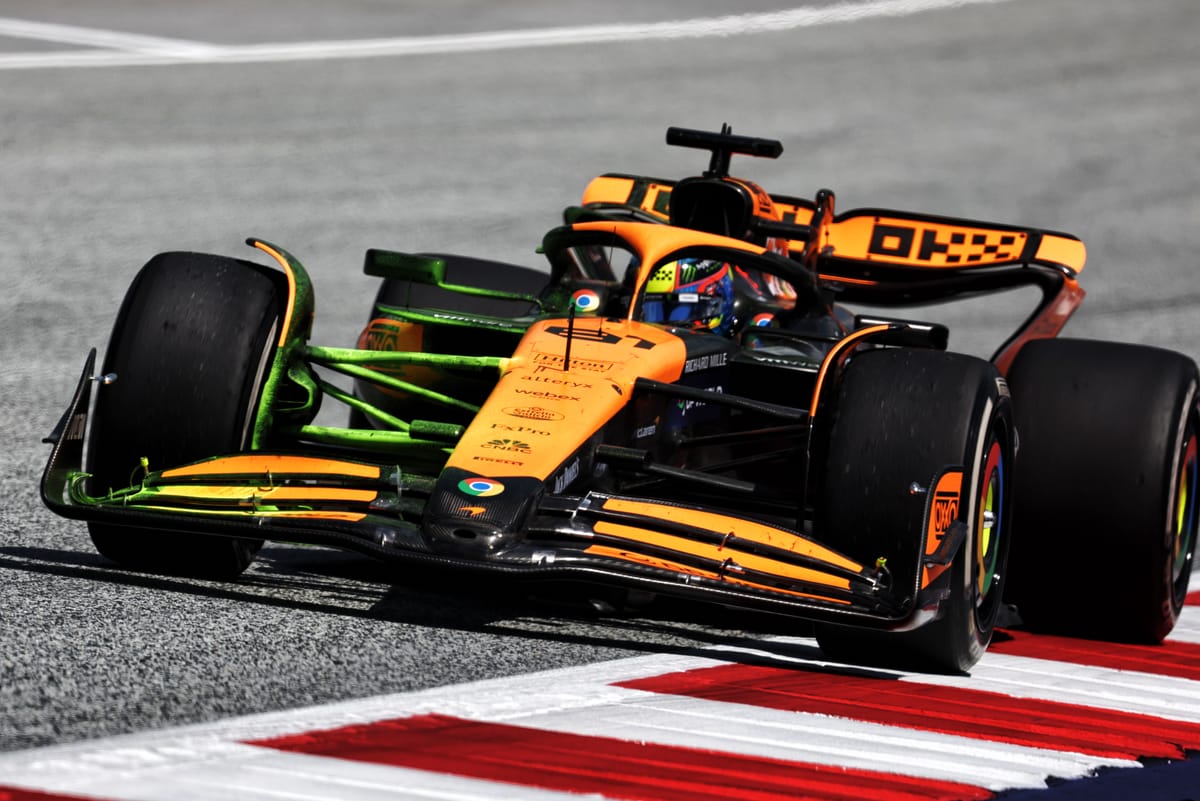
In the world of Formula 1, incremental improvements can pave the way for significant gains on the track. McLaren's recent introduction of a new front wing during the Austrian Grand Prix exemplifies this principle. Lando Norris nearly secured the team's second victory of the season, a milestone that underscores the effectiveness of recent developments.
Challenges in F1 development are widespread, particularly concerning ground-effect cars. These vehicles require nuanced characteristics for varying corner speeds, complicating the design process. Notably, the FIA has imposed regulations on weight distribution changes to prevent teams from overloading tires, a rule established to protect tyre integrity since 2011.
With only a 1.5% allowance for weight distribution adjustments, teams like McLaren must rely heavily on aerodynamic solutions to optimize performance. "The normal tendency for these cars is to understeer in low- and medium-speed corners. This turns to oversteer in high-speed corners. It is the degree of either that makes one team, and even driver, stand out from the other," said Gary Anderson, an esteemed F1 analyst.
-competes-with-Ferraris-Monegasque-driver-Charles-Leclerc.jpeg?trim=0,0,0,0&width=1200&height=800&crop=1200:800)
McLaren's approach appears to be one of the few that effectively adapts to these demands. "McLaren impresses me because it appears to be one of the only teams to actually understand this requirement. More importantly, it brings developments to the car that improve its overall performance in both low- and high-speed corners," Anderson added, emphasizing the team's competitive edge.
The front and rear ride heights are critical factors influencing car performance, adjusting at approximately a 2:1 ratio. This is essential as aerodynamic load increases with speed, necessitating precise control over steering angles in low-speed corners. Anderson elaborated, "Taking that into account, it's important in maximising the overall downforce, especially the front at high ride heights and high steering angles."
Aerodynamic efficiency is fundamentally tied to the airflow generated by the front wing. "As I always say, the airflow coming off the trailing edge of the front wing is what the rest of the car has to work with. This means it is the first thing you need to optimise and, the more uniform and consistent that flow is, the better your understanding of how to develop the underfloor will be," Anderson indicated, suggesting that a strong front wing design is foundational for overall performance.
In contrast, other teams have struggled. For instance, Anderson cited Ferrari's recent complaints regarding car instability. "We heard the Ferrari drivers at the Red Bull Ring complain about the car bouncing again. This is when the losses from the airflow separation in the underfloor are greater than the downforce increase from higher speeds."
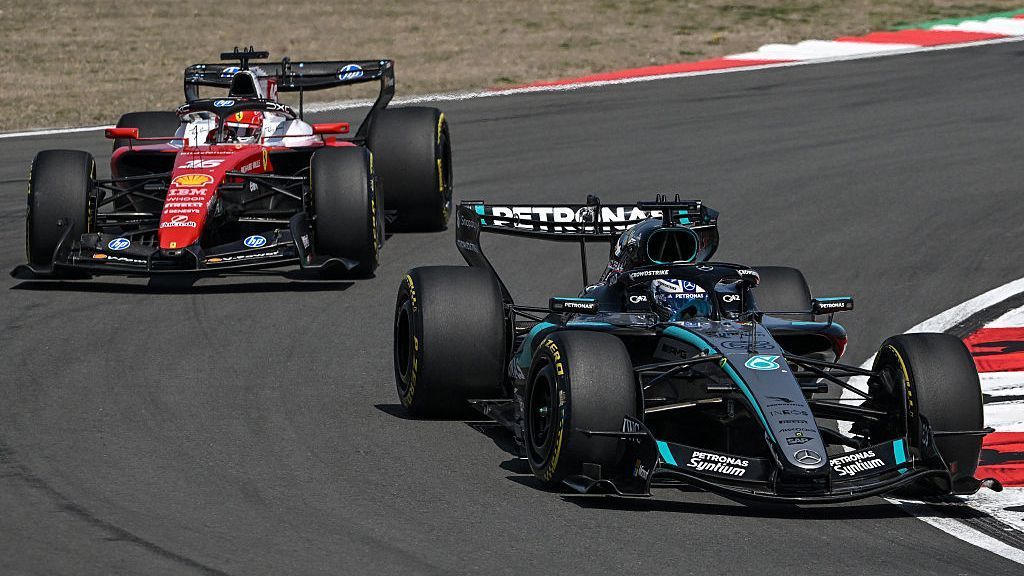
Such instabilities highlight a departure from successful aerodynamic solutions. Similarly, Mercedes began the season with a revolutionary front wing configuration that quickly fell out of favor. "That’s now in the rubbish skip and both drivers claim the new, more conventional front wing design has brought the car alive," Anderson disclosed, indicating a shift back to more tried-and-true design principles.
The response from McLaren leadership reveals an understanding of the complexities at play in wing development. Mark Hughes, writing for The Race, quoted team principal Andrea Stella addressing these multifaceted challenges: "Especially with this generation of cars and this generation of front wing regulations, the geometries are very restricted. Therefore, it’s difficult to achieve what you want in low speed, or at high steering angles, and what you want in a straight line, or what we want in high speed."
Stella highlighted that many teams, including McLaren, continue to search for a balance between these competing demands. "Hopefully, the compromise we are working on is capable of delivering some low-speed benefit, but without affecting high-speed performance too much," he concluded, expressing cautious optimism about the new wing's impact.
Overall, McLaren's new front wing stands as a testament to the team's evolutionary journey in Formula 1, combining innovation with a strategic understanding of vehicle dynamics. As teams continue to push the limits of technology and design, the pressure to find the right balance in aerodynamics will only intensify. McLaren's current trajectory suggests that they are well-positioned to navigate these challenges successfully, further solidifying their competitiveness on the circuit.