
As Formula 1 enters 2026, significant regulation changes are on the horizon, promising to transform the sport. This year is heralded as a landmark moment, characterized by revisions that aim to inject more excitement into the 24-race calendar.
"The biggest overhaul of regulations in the sport’s history," said an F1 official, summarizing the extensive modifications set to unfold.
One of the foremost aspects of these changes is the redesign of the aerodynamic components of the cars. According to the official press release, the adjustments to the chassis are aimed at improving agility, speed, and responsiveness. Specifically, the wheelbase is set to shrink by 200mm, bringing it down from 3600mm to 3400mm. Additionally, the car’s width will be narrowed by 100mm, shifting from 2000mm to 1900mm, with the minimum weight seeing a decrease of 30kg, from 800kg to 770kg.
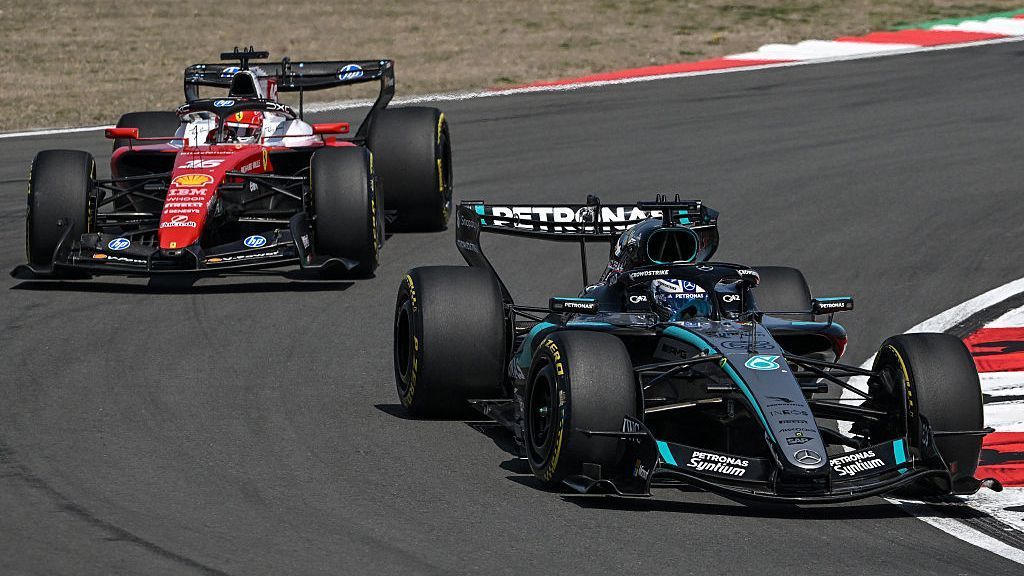
-competes-with-Ferraris-Monegasque-driver-Charles-Leclerc.jpeg?trim=0,0,0,0&width=1200&height=800&crop=1200:800)
The tire dimensions will remain at 18 inches, but front wheels will narrow by 25mm, while rear wheels will reduce by 30mm. These changes are projected to decrease aerodynamic drag by 40%, which is expected to enhance straight-line speeds and make races more thrilling.
To elaborate on the impact of these changes, an aerodynamic expert stated, "By removing the ground-effect floor tunnels that previously accelerated airflow, we anticipate a reduction in downforce of 15-30%. This alteration means we'll introduce adjustable front and rear wings to replace the old Drag Reduction System (DRS)."
These adjustable wings will offer high and low downforce options, enabling drivers to achieve optimal grip and speed when strategies dictate. "Higher downforce maximizes aerodynamics, ensuring competitive performance on turn-heavy circuits, while lower downforce configurations will excel on faster tracks like Baku and Monza," explained a senior F1 engineer.
In addition to the aerodynamic shifts, the hybrid engines underpinning F1 races are also undergoing a transformation. Since their introduction in 2014, the power units have largely remained unchanged, featuring a 1.6-liter turbocharged V6. However, the 2026 regulations will see a critical evolution in energy recovery systems.
The MGU-Kinetic will remain in use, but the MGU-Heat will be dropped. "Eliminating the MGU-H simplifies our approach and amplifies the power of the MGU-K from 120kW to 350kW, further supporting the drive for increased speed," said an F1 executive. This shift targets the balance of power between traditional and electric systems within the engines.
Interestingly, the MGU-H was considered ineffective and overly complex. An F1 spokesperson acknowledged, "The MGU-H was never adopted by road car manufacturers, and this needed addressing as we aim to engage more manufacturers, which we’ve already achieved with Audi and Ford for 2026."
Furthermore, this move positions power units closer to an even divide between internal combustion engines and electric power. By enhancing electric performance, F1 is looking toward a sustainable future while maintaining the thrilling nature of high-speed racing.
Overall, as the new regulations take hold in 2026, a wave of anticipation is building within the motorsport community. Changes designed to heighten competition and alter the dynamic of racing are likely to create more overtaking opportunities and shifts in strategy, captivating fans and teams alike.

With the introduction of these rules, the landscape of Formula 1 could witness a significant transformation, setting the stage for new rivalries and memorable moments in the season to come. As an F1 spokesperson concluded, "Our focus remains on ensuring that F1 continues to be at the forefront of racing innovation and excitement."