The world of Formula 1 is on the verge of a significant transformation. The 2026 regulations are set to shake up the sport fundamentally, creating a landscape that will challenge the most seasoned engineers and entirely redefine the look and sound of F1 cars.
"Formula 1 doesn’t just evolve; it revolutionises," said a spokesperson. Understanding these upcoming changes is crucial for anyone interested in a career in motorsport.
At the heart of the impending changes lies the new power unit, which aims to simplify the current setup. Gone will be the complex MGU-H (Motor Generator Unit – Heat), a change that has attracted new manufacturers such as Audi and Ford to join the fray.
-competes-with-Ferraris-Monegasque-driver-Charles-Leclerc.jpeg?trim=0,0,0,0&width=1200&height=800&crop=1200:800)
Drivers will gain an exciting new tool designed to enhance overtaking opportunities: the “override” button. "Below 340kph, a leading car’s electrical deployment will taper off, while the chasing car can deploy full electrical power up to 355kph via a manual override mode," explained an F1 technical expert. This is envisioned as a modern take on DRS, meant to create a dramatic “slingshot” effect on the straights.
The fueling aspect is also revolutionary. F1 is aiming for a 100% sustainable fuel formula, utilizing sources like non-food biomass, municipal waste, and carbon capture. This step addresses the global drive for greener technology, placing a significant challenge on fuel suppliers such as Shell, Petronas, and Aramco.
Additionally, the power distribution will see a significant shift, splitting electric and combustion power roughly 50/50. "The simplified internal combustion engine will produce around 540bhp, while the battery and electric motor will deliver a massive 470bhp boost," noted an F1 analyst. This change signals a crucial movement towards electrical power.
The overall design of the cars is undergoing a drastic makeover as well. The rule changes aim to introduce what has been termed the “nimble car” concept. Presently, F1 cars are larger and heavier than ever. "The 2026 rules will allow for a target weight reduction of 30kg, ultimately enhancing agility and performance," stated an engineer involved in team development.
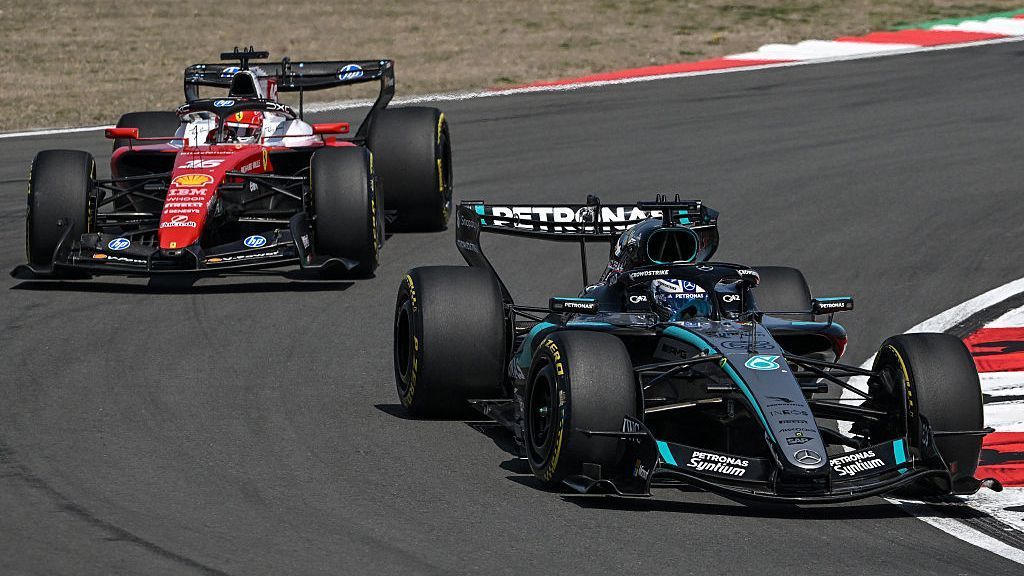
These changes also aim to mitigate the issue of “dirty air,” which has long been a concern for close racing. The recent alterations to aerodynamics, combined with the elimination of front wheel arches, are crafted to reduce turbulence. "We hope these new aero rules will lead to more wheel-to-wheel racing among competitors," added a seasoned F1 strategist.
For the first time, teams will also incorporate active aerodynamics; both the front and rear wings of the cars will be actively adjustable. They can switch settings dynamically, running in a high-downforce mode for cornering and transitioning to a low-drag mode for straight-line speed. "This is a massive leap from the single-element DRS flap we have now," said a mechanics expert.
The big question looming over this revolution is: who will rise to the occasion? The shifts in regulations mean that current team dominance won't guarantee success in 2026. Teams like McLaren and Aston Martin will need to adapt quickly to the new power units from their suppliers, and the pressure is on them to keep pace with more established manufacturers.
Meanwhile, newcomers like Red Bull-Ford and Audi are emerging wildcards in this competitive landscape. "Red Bull is building its own power unit for the first time, which is no small feat, while Audi is entering as a full works team equipped with a significant budget and a stellar engineering reputation," remarked a veteran analyst.

Established teams such as Mercedes, Ferrari, and Alpine (Renault), which design their own engines, might hold a historical advantage. They possess the ability to harmonize the design between the power unit and chassis closely.
Ultimately, the 2026 regulations set the stage not just for new cars but for a new set of challenges that demand innovative problem-solving. "This is a once-in-a-generation opportunity for aspiring engineers, strategists, and data scientists, as they will face the interplay between sustainable fuel, electrical power, and active aerodynamics," said a prominent F1 team manager.
The race for 2026 has already begun, and with it comes the race for talent. Teams that can attract the brightest minds will dominate this new era of Formula 1, shaping the sport’s future in unprecedented ways.
In summary, the upcoming regulations signify a pivotal shift for Formula 1, ushering in a new age defined by technological innovation and sustainability. As teams gear up for this dramatic change, the excitement surrounding the 2026 season continues to build.